Quick answer
Mexican-Asian fusion food blends ingredients and techniques from Mexico with those of Asia (Japan, Korea, Thailand) in a single dish. It works because both cuisines share an obsession with heat, acidity, fermentation and the shared table.
Where can you try it in the city? At Mal de Ojo, a rooftop in Medellín where this fusion is the heart of the menu, with dishes like the pork belly taco with kimchi or the aguachile with ponzu.
A taco made with pork belly and kimchi. An aguachile that swaps pure lime for Japanese ponzu. It sounds strange written down, but the first bite clears it all up: Mexico and Asia speak the same language when it comes to acidity, heat and umami. That is Mexican-Asian fusion food, and it is no passing trend: it is one of the blends that works best in contemporary cooking.
If you want to try it without leaving the city, there is a rooftop in Medellín where this fusion is the center of the menu and not a one-night gimmick. But before you book, it is worth understanding exactly what it is, where it comes from and why two such distant traditions end up fitting so well on the same plate.
What is fusion food?
Fusion food is, in simple terms, cooking that blends techniques, ingredients and traditions from two or more distinct culinary cultures. It is not tossing random things onto a plate: good fusion respects the logic of each cuisine and looks for the point where they lift each other up, not where they clash.
The term became popular in the 1980s, when chefs in California and New York started crossing European cooking with Asian. Since then the idea has opened up to every possible combination. Mexican-Asian fusion is one of the most solid branches, because the two cuisines share a common obsession: the balance between the acidic, the spicy, the salty and the fresh.
Real fusion starts from knowing both cuisines inside out. A chef who understands Mexican aguachile and nikkei ceviche knows exactly where ponzu adds something and where it would ruin the dish. When the blend is well resolved, you do not think “this is strange”; you think “this had to exist”.
Why do Mexico and Asia fit together so well?
They seem like opposite worlds, but they share more than meets the eye:
| Common thread | In Mexico | In Asia |
|---|---|---|
| Heat as a language | Chili and ají | Wasabi, Korean gochujang |
| The acidity that wakes you up | Lime in aguachile | Ponzu, Japanese yuzu |
| The culture of fermentation | Salsas and pickles | Kimchi, soy, miso |
| Food made for sharing | The taco, passed around | Dim sum, sushi |
That common ground is why Mexican-Asian fusion never feels forced. You are not putting together two things that fight each other: you are joining two cuisines that, deep down, chase the same balance.
How is this fusion experienced at Mal de Ojo?
At Mal de Ojo, Mexican-Asian fusion is not a couple of stray dishes: it is the heart of the kitchen. Two examples explain it better than any definition:
The pork belly brings the fat and deep flavor you expect from a good taco; the kimchi steps in with its fermented acidity and Korean heat to cut through that richness. The result is a bite that starts bold and ends fresh.
Mexican aguachile lives on acidity and chili. By swapping part of the citrus for Japanese ponzu, it gains a salty, umami layer that rounds out the dish without covering the seafood. It is fusion in its cleanest form.
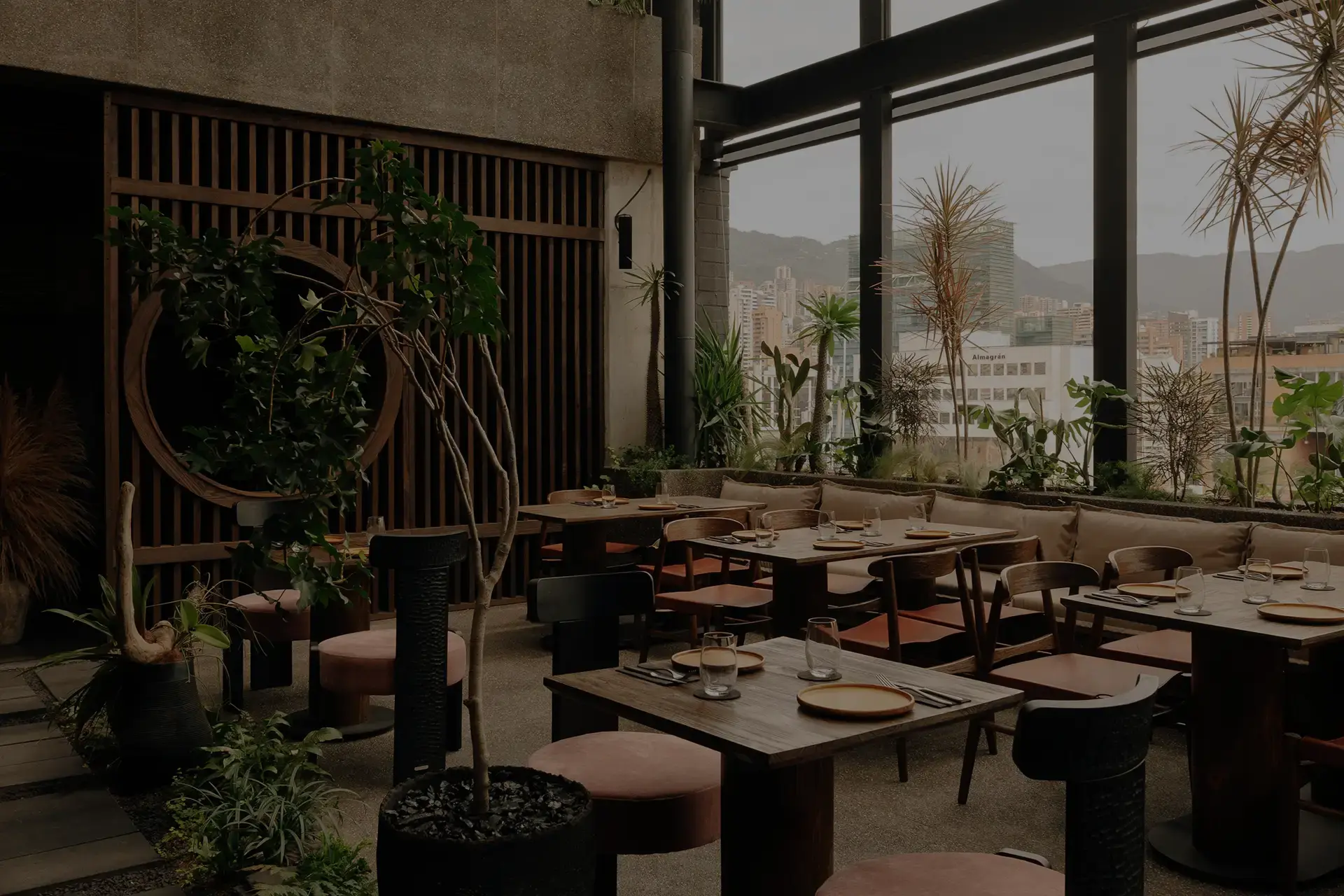
These dishes are made to open the evening: you order them at the start, share them at the table and set the tone for what comes next. And since all of this happens on a terrace in Astorga with a panoramic view of El Poblado and the mountains, the food is only part of the plan.
Try the fusion at Mal de Ojo
Pork belly taco with kimchi, aguachile with ponzu and signature cocktails on a terrace overlooking El Poblado.
Book your tableWhat to look for in a good fusion dish?
If you want to tell well-made fusion from what is only marketing, look for this:
- Balance, not noise You should be able to identify the main flavors. If everything blurs into one confusing note, something went wrong.
- Ingredients that are respected The seafood still tastes like seafood; the pork belly, like pork belly. Fusion adds layers, it does not bury them.
- Coherence across the menu A good fusion spot does not have a single "strange" dish to grab attention: the whole offering speaks the same language.
- Real technique Behind an aguachile with ponzu there is someone who knows how to do both things separately. The technique shows.
Frequently asked questions
What exactly is Mexican-Asian fusion food?
It is cooking that blends ingredients and techniques from Mexico with those of Asia (Japan, Korea, Thailand, among others) in a single dish. It works because both cuisines share a love for heat, acidity and fermentation. Clear examples are a taco with kimchi or an aguachile with ponzu.
Is fusion food spicy?
It can be, but it does not have to be. Mexican chili and Asian heat are often present, but a good fusion dish uses them to add character, not to punish your palate. You can always ask about the spice level before ordering.
Where can I try Mexican-Asian fusion food in Medellín?
At Mal de Ojo, a rooftop in Astorga, El Poblado, where Mexican-Asian fusion is the heart of the menu. You can book online and try dishes like the pork belly taco with kimchi or the aguachile with ponzu.
Is it only cocktails and small plates, or is there a full menu?
There is a real menu. At Mal de Ojo, Mexican-Asian fusion is a kitchen built to start with small plates and stay for dinner, paired with signature cocktails and live music.
In short
- Mexican-Asian fusion joins two cuisines that seek the same thing: balance between heat, acidity and umami.
- It is not confusion: it starts from knowing both traditions inside out.
- Look for balance, ingredients that are respected and coherence across the menu.
- At Mal de Ojo it is the heart of the menu: pork belly taco with kimchi, aguachile with ponzu.