Quick answer
Pairing cocktails with Asian food comes down to three levers: acidity to cut through fat, sweetness to tame heat, and herbal or umami notes to sit alongside soy and fermentation. The base rule: the cocktail accompanies, it never competes.
Where can you try it done on purpose? At Mal de Ojo, a rooftop in Medellín, where the cocktail list is built hand in hand with the kitchen.
Wine had centuries to write its pairing rules. The cocktail is only now writing its own, and with Asian food the advantage is huge: where wine struggles with heat, soy and ginger, a cocktail can dial in acidity, sweetness, bitterness and aromatics with laboratory precision.
In this guide I explain how that balance works and how to apply it in practice, dish by dish. And if you would rather skip the theory and taste it straight away, the signature cocktails of a rooftop in Medellín with Mexican-Asian fusion cooking are the best shortcut there is.
Why does a cocktail pair better than wine with Asian food?
Asian cooking plays with intensities that throw most wines off balance: salty soy, spicy ginger, chilies, fermented pastes, rice vinegars, citrus like yuzu. Faced with that, a red with high tannins turns metallic and a delicate white simply disappears.
The cocktail has a structural advantage: it is a recipe. The bartender decides how much acid, how much sugar, which bitter and which aromatics go into the glass, and can calibrate the mix to answer one exact dish. They can push the citrus to cut through something fried, lower the alcohol so the palate does not tire during a long meal, or bring in a bridge ingredient (sake, shiso, ponzu, sesame) that connects with the kitchen from the inside.
Umami (present in soy, miso, mushrooms, dashi and fermented sauces) amplifies the perception of bitterness and alcohol. That is why a very boozy or very bitter cocktail feels more aggressive with Asian food than it would on its own: when pairing, it pays to dial the load down and the freshness up.
What are the basic rules of cocktail pairing?
There is no endless table to memorize: four principles cover almost any menu.
- Acidity against fat Fried food, pork belly, spicy mayo or tempura call for a dry, citrusy cocktail. The acidity cleans the palate and sets up the next bite.
- Sweetness against heat Sugar and tropical ingredients calm capsaicin down. A cocktail with lychee, passion fruit or honey makes a chili-heavy dish much easier to enjoy.
- Match intensity with intensity A powerful dish needs a cocktail with body (mezcal, Japanese whisky, aged rum). A delicate one, like sashimi, calls for something ethereal: sake, gin, soft citrus.
- Flavor bridges If the dish carries ginger, sesame or yuzu, a cocktail that echoes that ingredient creates continuity and makes the pairing feel like a single idea.
Which cocktail goes with each Asian dish?
This table sums up the matches that almost always work and helps you order with confidence from any list:
| Dish | What dominates | Ideal cocktail profile |
|---|---|---|
| Sashimi or tiradito | Delicacy and sea salt | Dry and citrusy: gin, sake, a touch of cucumber |
| Aguachile or spicy ceviche | Acidity and chili | Slightly sweet and fruity: passion fruit, lychee |
| Sushi with sweet sauces | Umami and sweetness | Soft bitterness: aperitif, citrus, little sugar |
| Wok or noodles with soy | Salty umami and fat | Mezcal or Japanese whisky with citrus |
| Fried food and tempura | Fat and crunch | High acidity and bubbles: sparkling or highball |
| Curry or coconut dishes | Creaminess and spice | Herbal and fresh: basil, mint, lime |
| Matcha or sesame desserts | Vegetal bitterness, toasted notes | Aged rum or coffee, nothing too sweet |
How do you order a pairing from start to finish?
A well-built pairing has a curve, just like a tasting menu. The idea is for each glass to climb one step without wearing the palate out before the end.
Start light: a high-acidity, low-sugar cocktail for the cold starters (seafood, aguachiles, citrus salads). Follow with something fruity and something rounder for the spicy or wok dishes. Close with an aged spirit, an after-dinner cocktail or something with coffee if dessert is on the table. That order respects the logic of taste: the delicate first, the intense after.
If you are torn between two options, ask the bartender which cocktail was designed with the dish you are about to order in mind. On a signature list there are almost always two or three built together with the kitchen, and those are the pairings you really notice.
How is this pairing done at Mal de Ojo?
At Mal de Ojo the cocktail list is not an annex to the menu: it is part of the same conversation. The kitchen crosses Mexico with Asia (citrusy seafood, ponzu, chilies, wok, Japanese techniques) and the bar works with the same bridge ingredients, so the pairing comes out naturally instead of feeling forced.
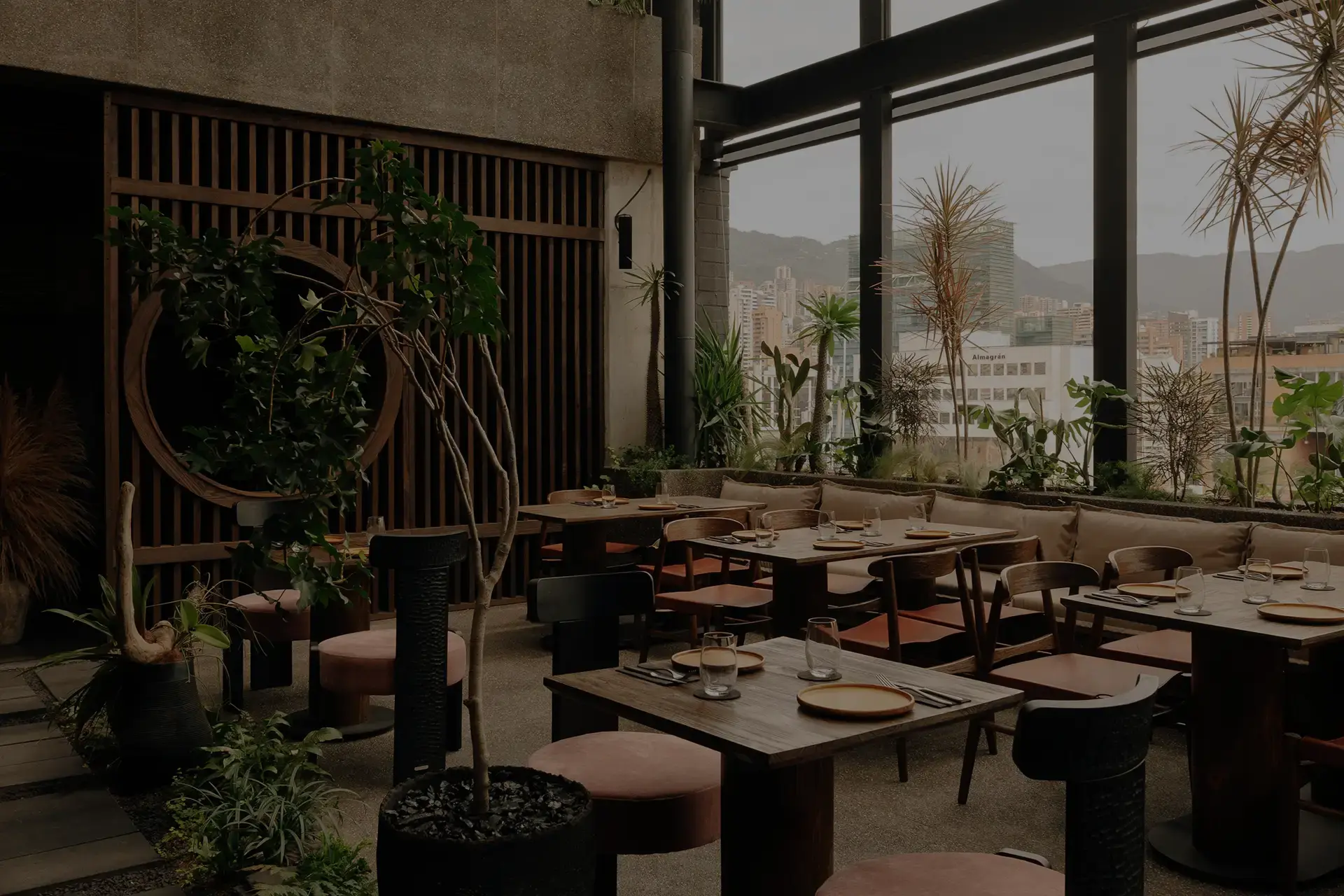
An aguachile with ponzu, for example, calls for a fruity cocktail that softens the chili without erasing the citrus. A wok dish with soy works better with mezcal, because the smoke talks to the toasted and salty notes. And since it all happens on a terrace in Astorga with a panoramic view of El Poblado, the pairing includes something no glass can bring: the sunset over the valley.
Try the signature pairing at Mal de Ojo
Cocktails designed dish by dish, Mexican-Asian fusion cooking and a terrace with a view over El Poblado.
Book your tableFrequently asked questions
Can you pair Asian food with cocktails instead of wine?
Yes, and it often works better. Soy, heat and fermented ingredients throw most wines off balance, while a cocktail lets you calibrate acidity, sweetness and aromatics to fit the dish.
Which cocktail goes well with sushi?
It depends on the piece. For clean sashimi and nigiri, dry citrusy cocktails work well (gin, sake, cucumber). For rolls with sweet sauces, go for something with soft bitterness and little sugar, so you are not stacking two sweetnesses.
How do you tone down the heat of a dish with a cocktail?
With sweetness and fruit: lychee, passion fruit, mango or a touch of honey calm the burn. It also helps for the cocktail to be very cold and not too boozy, since alcohol intensifies the heat.
Where can you try cocktail and Asian food pairings in Medellín?
At Mal de Ojo, a rooftop in Astorga (El Poblado) with Mexican-Asian fusion cooking and signature cocktails designed alongside the menu. You can book online and ask for a pairing recommendation at the table.
In short
- Cocktails pair better than wine with Asian food because they can be calibrated to measure.
- Four rules: acidity against fat, sweetness against heat, matched intensity and flavor bridges.
- Order the pairing from delicate to intense, just like a tasting menu.
- At Mal de Ojo the bar and the kitchen work with the same bridge ingredients.